
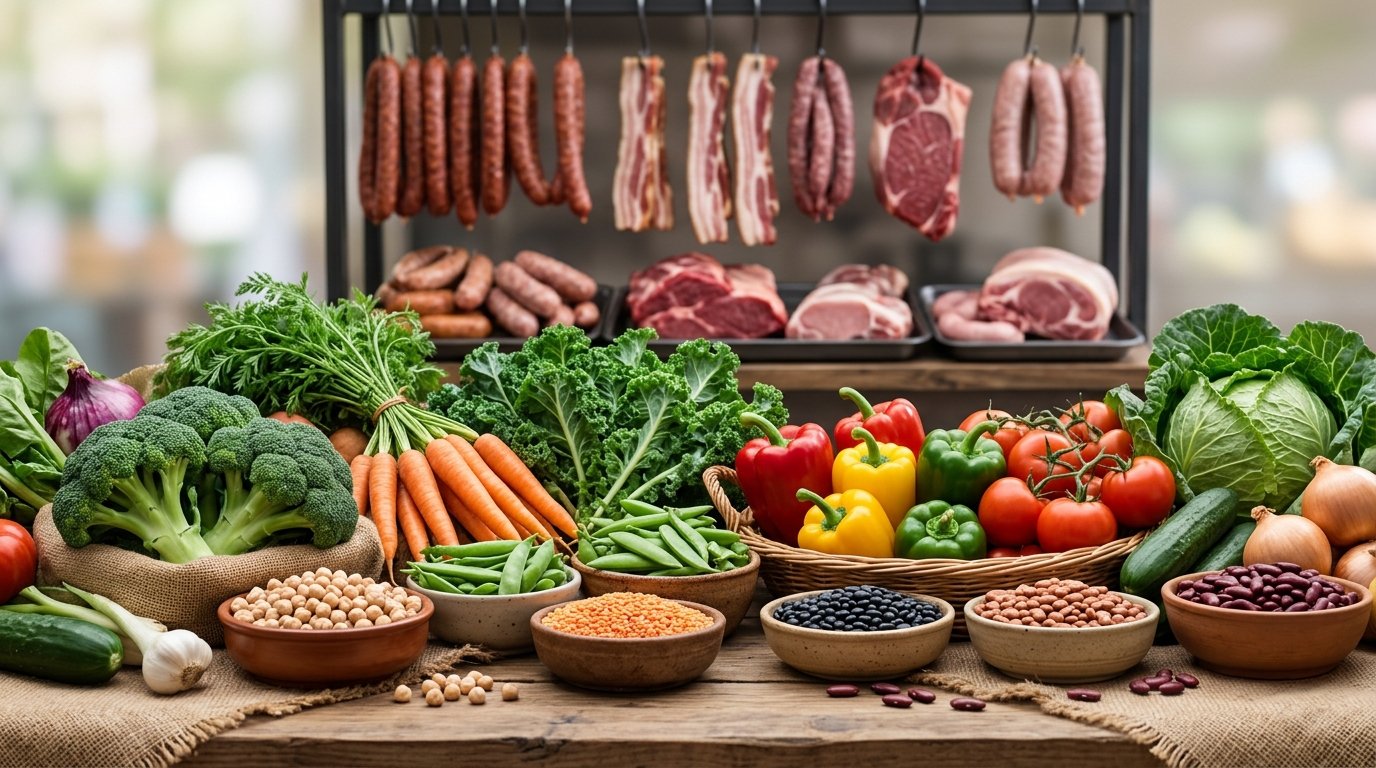
Swap Meat For Vegetables To Cut Chronic Disease: 4.5 Million Cases Averted, Study Finds
September 17, 2026, marks the publication of a pivotal study in the European Journal of Nutrition. The study models UK diet data over three decades, projecting significant health benefits from dietary changes. It aligns with the World Health Organization's stance, linking red and processed meat consumption to increased risks of non-communicable diseases like cancer and cardiovascular disease.
A modelling study uses existing data to estimate outcomes from hypothetical diet changes, rather than conducting a forward-looking trial. Here, chronic disease refers to long-term conditions such as heart disease, stroke, cancer, and type 2 diabetes, which can be influenced by diet over time. Life expectancy is the projected average lifespan for the population under each dietary scenario.
According to nomilkforme.com, the UK-specific recommendation is clear: reduce red and processed meat intake and replace it with vegetables and legumes. The study outlines two reduction scenarios with projected outcomes.
| Scenario | Meat reduction level | Projected disease cases averted | Life expectancy gain |
| Lower-cut scenario | 35% | 3.4 million | 7.2 months |
| Higher-cut scenario | 50% | 4.5 million | 9.4 months |
The study's message is straightforward: health benefits are linked to swapping foods, not merely reducing meat consumption. The projections rely on replacing red and processed meat with vegetables and legumes in the UK diet model.
Why This Analysis Stands Out
On April 28, 2026, the study was released as a preprint, making waves by translating general dietary advice into specific UK case projections and life expectancy gains, as noted by Research Square.
This shifts the narrative. Traditional advice indicates risk direction, but this analysis ties outcomes to a specific dietary swap, showing that most benefits stem from the replacement foods rather than just reducing meat.
- 2023: An analysis of clinical guidelines found nearly 75% recommended increasing vegetable intake, the highest for any food group.
- 2023: The same analysis found no guidelines recommending reducing vegetable intake.
- 2026-04-28: The UK diet study was posted as a preprint.
- 2026-09-17: The paper was published in a journal.
- 2026-10: News coverage followed the publication.
The scenarios also hinge on previous, more ambitious Climate Change Committee targets. This UK statutory body advises on emissions targets and progress. The study's headline figures are based on a more aggressive meat reduction pathway than current national policies.
For those interpreting the study as a promise, this is the critical check. The impressive figures are linked to a stringent policy baseline, while about 75% of the health benefits are attributed to increased vegetable and legume consumption.
Who Faces the Most Risk
As of October 2026, those most at risk are individuals whose diets heavily feature red and processed meat. The projected decline in cardiovascular outcomes, including heart disease and stroke, accounts for much of the benefit. Vegconomist.com highlights that heart disease and stroke see the most significant reductions, with colorectal cancer and type 2 diabetes also decreasing.

**Why it matters:** When planning meals, the study suggests a clear direction. The health gains are primarily from swapping meat for vegetables and legumes.
Those already consuming more vegetables and legumes are not as exposed to the modeled risks, as the study attributes much of the health benefit to increased consumption of these foods rather than just reducing meat. The explicit verdict is clear: the riskiest dietary pattern involves high red and processed meat intake, while the safer approach is replacing it with vegetables and legumes.
The implicated diseases are chronic, prevalent, and concentrated in the model's most significant shifts. The World Health Organization's cited link is straightforward: red and processed meat are associated with higher risks of cancer and cardiovascular disease.
The study does not pinpoint specific occupations, regions, or age groups. It models UK population-level outcomes without isolating which individual groups bear the most risk.
Next Steps: Policy and Personal Choices
Research Square reports that 75% of the health benefits are tied to increased consumption of vegetables and legumes. Beans, peas, lentils, and similar pulses. This means the headline benefits do not result from merely cutting meat.
The study sets the direction. It does not determine whether governments, retailers, schools, and households will adopt these changes on a large scale. It also leaves a practical question unanswered: what will replace processed meat, which is preserved through curing, smoking, salting, or added chemicals.
| Established by the study | Still depends on policy or behaviour |
| About three quarters of the health gains are linked to higher vegetable and legume intake | Whether food standards, procurement, and pricing encourage these foods |
| Diet change can reduce chronic disease burden when meat is replaced with plant foods | Whether households replace meat with vegetables and legumes rather than other foods |
What This Means for You
If you reduce meat consumption and replace it with vegetables and legumes, you align with the pattern driving most of the projected gains. Filling the gap with refined snacks or extra cheese, however, does not align with the evidence.
Diet is a significant health risk factor. VegNews reports that an unhealthy diet causes more deaths globally than any other risk factor, including tobacco smoking. The next crucial decisions involve procurement rules, food pricing, and your shopping choices. The key is the replacement food.
Yes — The Study Confirms the Swap Reduces Chronic Disease
The headline figure of 4.5 million cases averted is accurate. The study provides a clear answer: replacing red and processed meat with vegetables and legumes reduces chronic disease, with the replacement foods doing most of the work.
For your diet, the advice is straightforward. Reduce meat if desired, but replace it with beans, lentils, peas, and more vegetables. Substituting with cheese, snacks, or other ultra-processed foods does not replicate the pattern behind the health gains.
Policy is the next hurdle. Schools, hospitals, retailers, and pricing will determine if this remains a model or becomes a widespread change.
What to do this week
- [ ] Replace one red or processed meat meal with a vegetables-and-legumes meal
- [ ] Add beans, lentils, or peas to your shopping list this week
- [ ] Check what fills the gap when you cut meat, and avoid replacing it with refined snacks
- [ ] If you buy lunch out, choose options centered around vegetables and legumes
- [ ] Treat the headline as a food-swap result, not a reward for eating less meat alone
Sources
- 1. [Swap Meat For Vegetables And Avert 4.5 Million Chronic Disease Cases, Finds Study]( https://plantbasednews.org/lifestyle/health/swap-meat-for-vegetables-chronic-disease/)